The Dresdner Stollenfest
THE HIGHLIGHT OF THE CHRISTMAS CITY OF DRESDEN
30th Dresden Stollen Festival on December 6, 2025
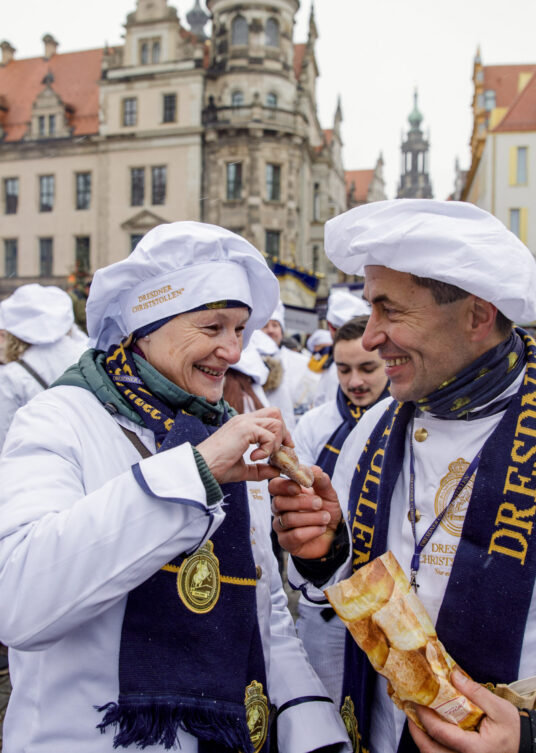
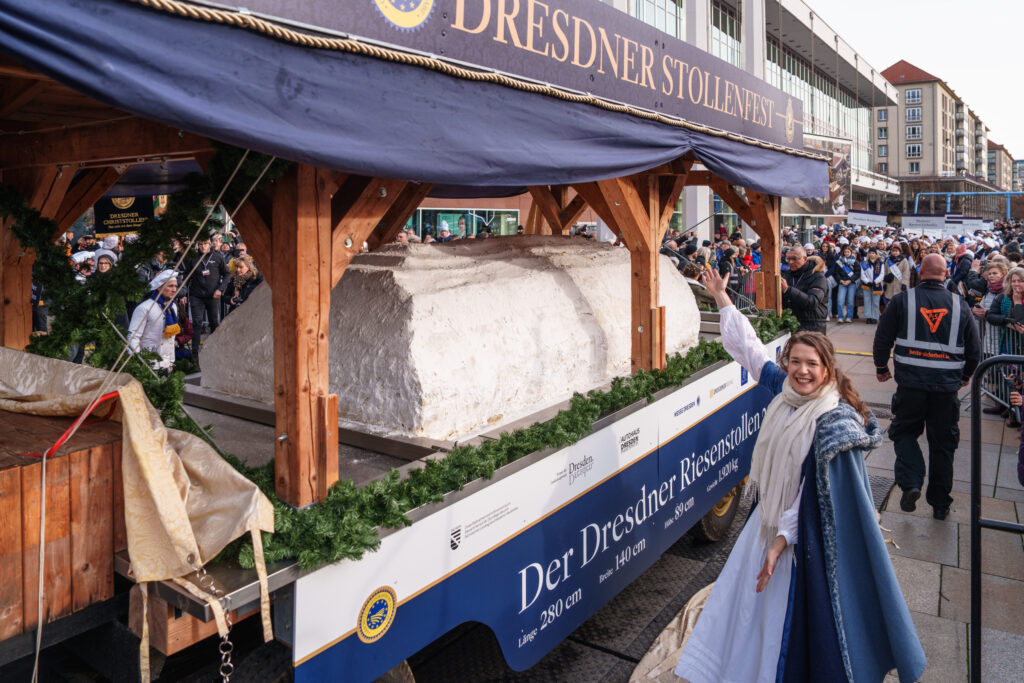
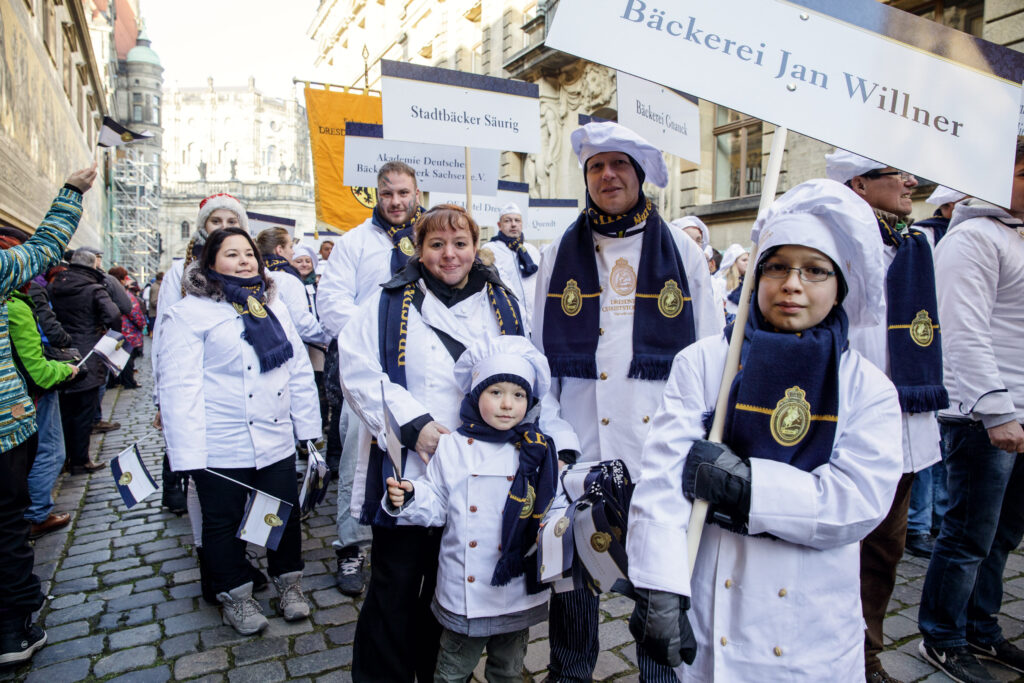
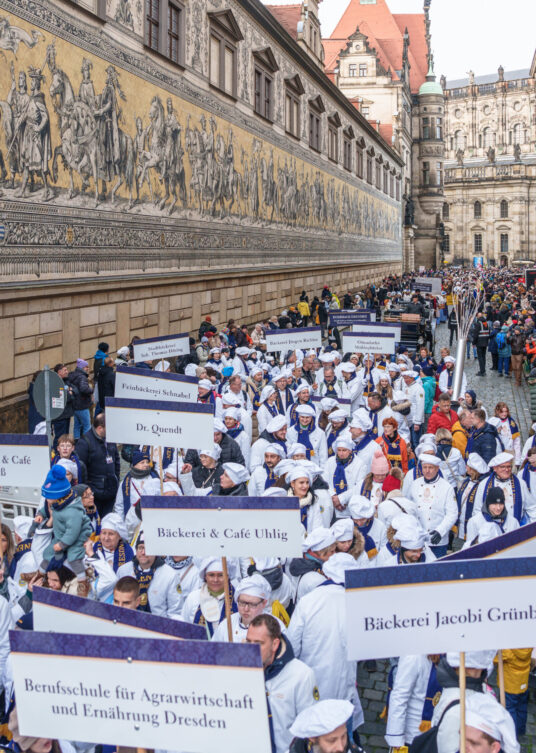
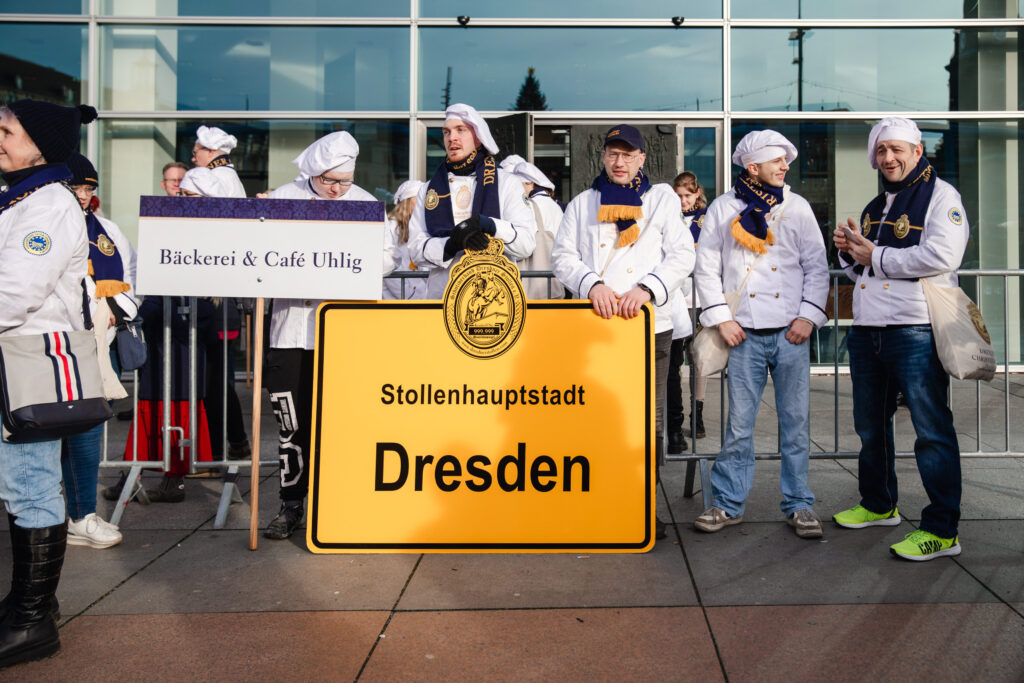
A grand parade, the XXL Striezel, a charming patroness, and hundreds of proud stollen bakers: these are the ingredients for the pre-Christmas highlight of the Saxon state capital – the Dresdner Stollenfest. Since 1994, the members of the Schutzverband Dresdner Stollen e. V. (Dresden Stollen Protective Association) have dedicated a festival to their Dresdner Christstollen. Together with tens of thousands of guests from all over the world, they celebrate the centuries-old baking tradition, the living craft, and above all, the very special Christmas treat. Every year on the Saturday before the second Sunday in Advent. More information about the festival will be available here soon.
This is how the anniversary Stollenfest will be celebrated on
December 6, 2025
TIME
ACTIVITY
From 9:45 a.m.
Baroque festivities in front of the Kulturpalast
From 10:00 a.m.
Grand opening of the Dresdner Stollenfest
Around 11:00 a.m.
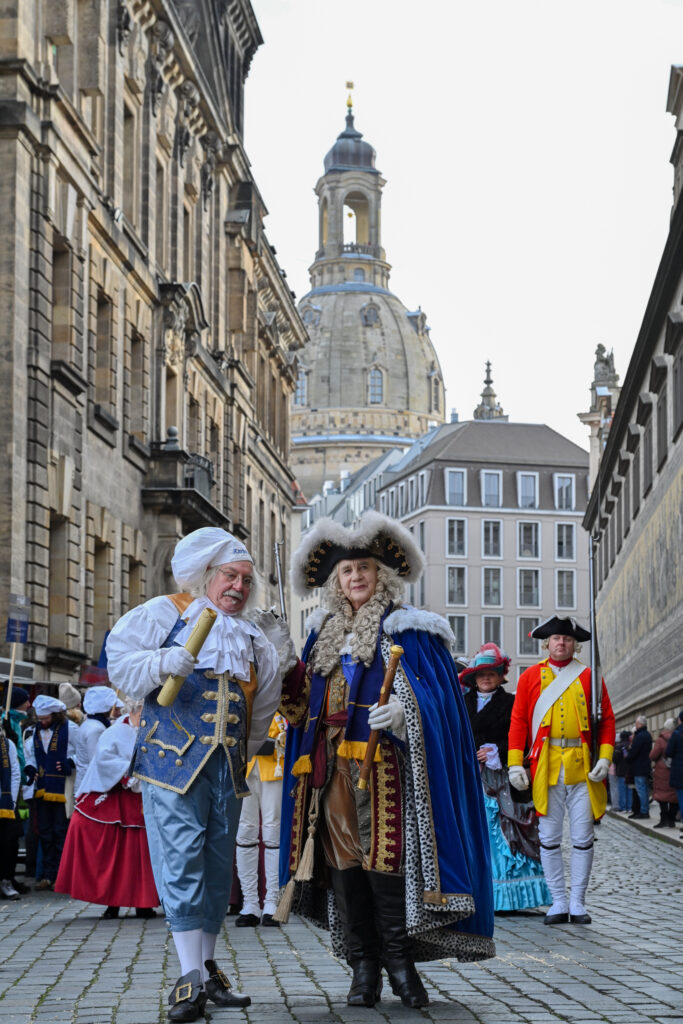
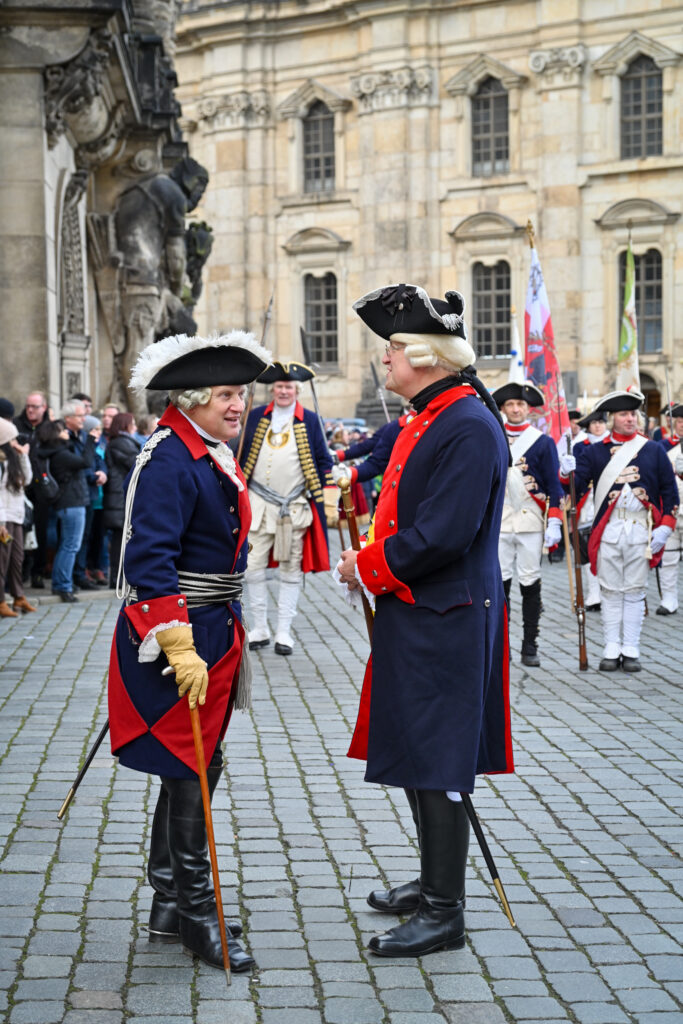
Start of the grand parade with historical images and lots of powdered sugar magic through the historic old town
Around 12:00 p.m.
Arrival of the parade at the stage in front of the Kulturpalast
Shortly after 12:00 p.m.
Cutting of the giant stollen
From approx. 12:15 p.m.
Sale of the giant stollen & music and talk about the Dresden Christmas stollen
Around 3:30 p.m.
End of the event
GIANT STOLLEN FOR A GOOD CAUSE
Our commitment to the region
The Dresdner Stollenfest is traditionally an occasion for the Schutzverband Dresdner Stollen e. V. (Dresden Stollen Protective Association) to support a regional project each year in the form of a generous donation. In 2024, part of the proceeds went to the Lichtblick e. V. foundation, which used the money to support the Brotzeit e. V. and Drobs e. V. initiatives.
STOLLENFEST GALLERY
All of Dresden covered in powdered sugar magic
THE STOLLENFEST HISTORY
Baroque origins – This is how the very first Stollenfest began
The Zwinger, the Hofkirche, Moritzburg Hunting Lodge: without Augustus the Strong, Elector of Saxony and King of Poland, the Free State would be poorer by several attractions. It is also certain that without Saxony’s most famous Wettin, there would be no Dresdner Stollenfest today.
The Zeithain Pleasure Camp – the origin of the Dresdner Stollenfest. In order to demonstrate the strength of his armed forces after the end of the Great Northern War, Frederick Augustus I invited nobles and military leaders from all over Europe to a military review in the spring of 1730. With the largest and most magnificent Baroque festival of all time, the Zeithainer Lustlager, he not only emphasized his military power, but also his penchant for record-breaking actions: The highlight of the festival was a huge Christstollen weighing around 1,800 kilograms, which the Elector had baked by Dresden master baker Johann Andreas Zacharias and 60 baker’s apprentices for the Lustlager.
Cut into 24,000 portions with the large Dresden stollen knife, the 18-ell (approx. 7-meter) long and 8-ell (approx. 3-meter) wide pastry was distributed to festival guests and soldiers. The copperplate engraving by artist Elias Baeck still bears witness to this spectacle today. It gives an idea of the challenges faced by the builders working for Matthäus Daniel Pöppelmann, who were commissioned to design and build an oven for August’s festive stollen.
Today, the Baroque festival is considered the origin of the Dresdner Stollenfest. In the early 1990s, art and culture expert Dr. Peter Mutscheller was commissioned by Hommage Dresden GmbH to research old, forgotten craft traditions. During his research in the copperplate engraving cabinet of the Elbe metropolis, he discovered evidence of the Baroque feast. The idea for the Dresdner Stollenfest was born.
In 1994, 264 years after the Zeithain feast, a 1,800-kilogram Dresdner Christstollen was baked and presented once again—this time not in Zeithain, but directly in Dresden’s historic old town—at the first Dresdner Stollenfest.
Already in its first year, thousands of Dresden residents and their guests celebrated the traditional pastry. Today, the festival is considered the highlight of the pre-Christmas season in Dresden.