A First on Board: Stollen Inspection on the Elbe
28. October 2025
PUBLIC STOLLEN INSPECTION 2025
A First on Board: Stollen Inspection on the Elbe
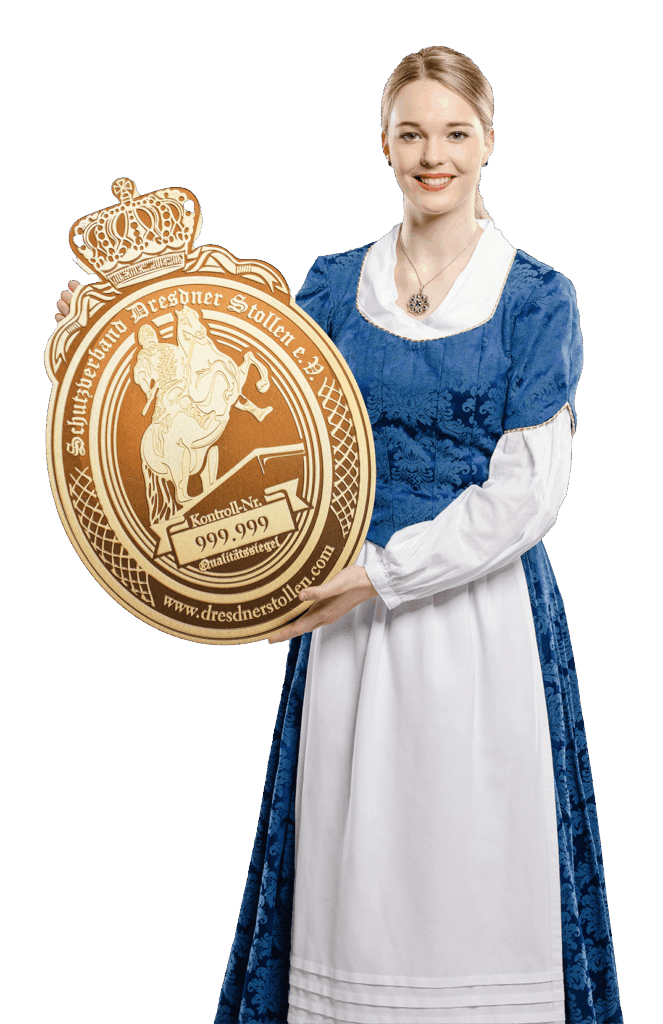
Committed to the highest quality: For the Schutzverband Dresdner Stollen e.V., this motto is not just an empty phrase, but a promise. That is why, even before the Stollen season begins, the annual Stollen inspection period is on the agenda. Only if these traditional pastries meet the high quality standards during the evaluation and receive a corresponding rating are they permitted to bear the golden Stollen seal.
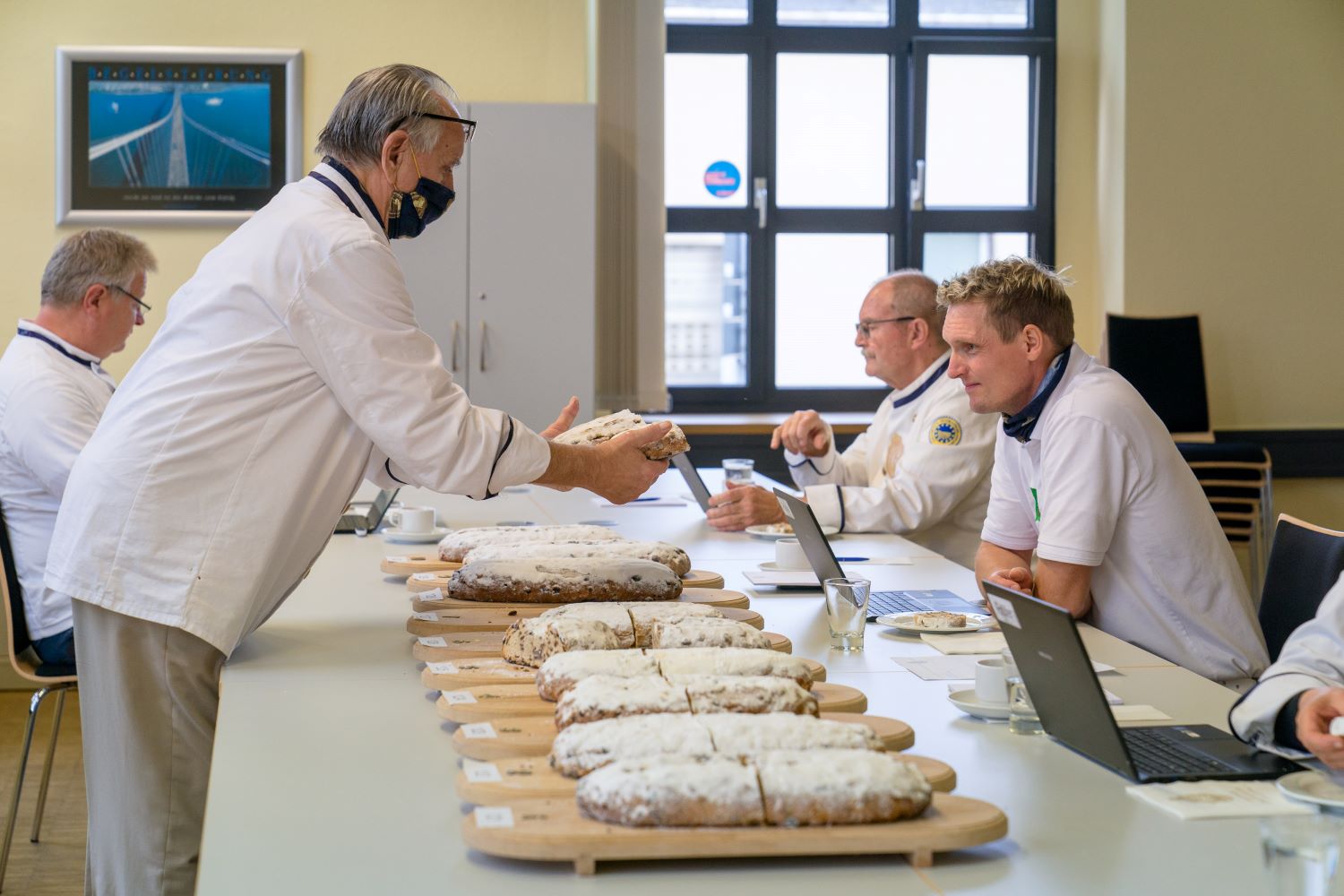
Over a total of 17 days this year, an independent panel of experts—comprising representatives from the baking and pastry trades as well as food industry specialists—will once again examine the Dresden stollen from approximately 100 producers within the protected region. In total, around 150 stollen are scrutinized during each two-hour session.
The expert panel does not know which bakery the stollen samples come from. The sampling process is also anonymous. A buyer acting on behalf of the Stollen Protection Association handles this. Only after making a purchase at a specialty store does he identify himself as a buyer. The stollen samples, collected under cover, are then sent for testing and anonymized in advance. After the inspection is completed, all businesses receive a report and are thus permitted to use the golden Stollen seal as a quality seal and label.
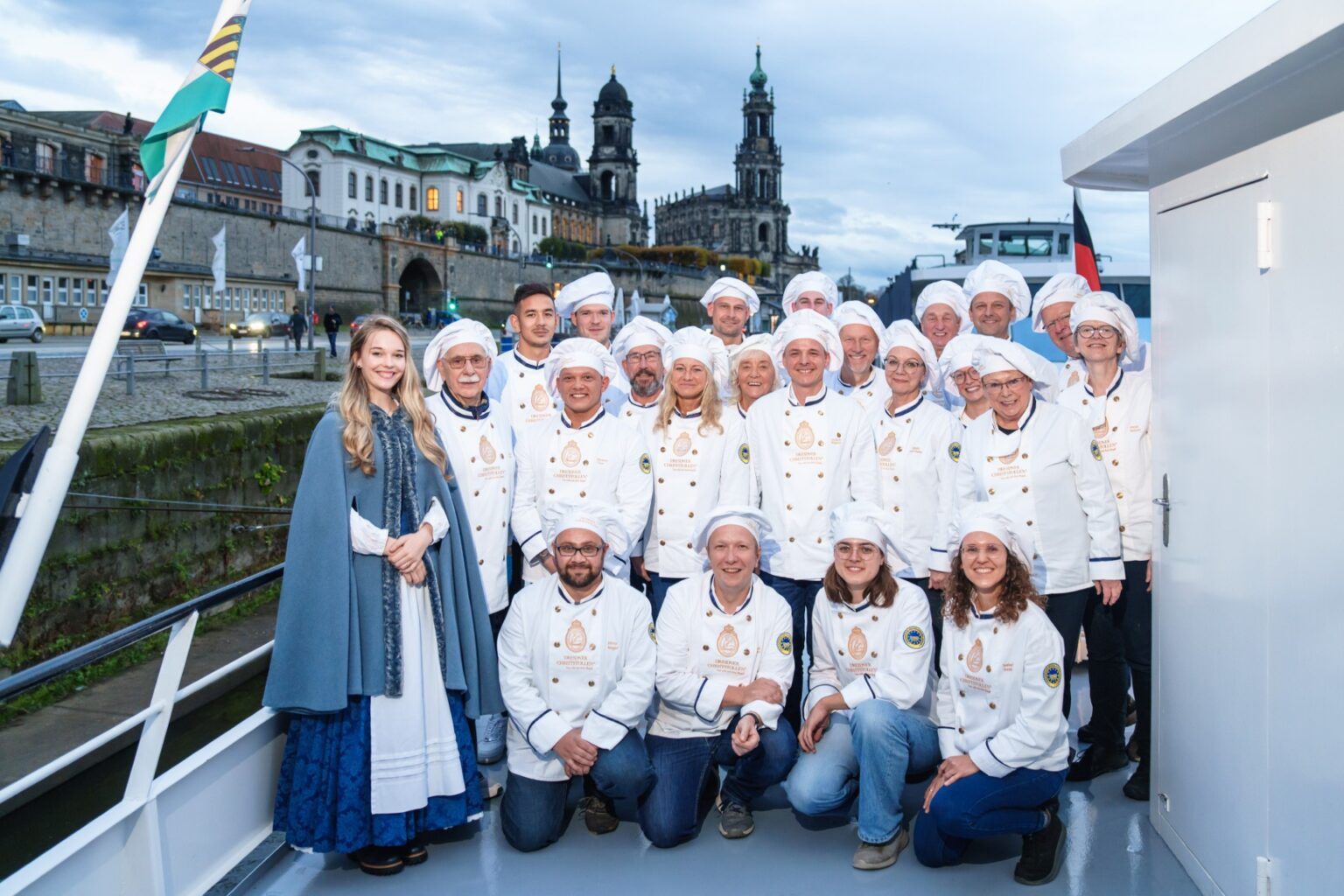
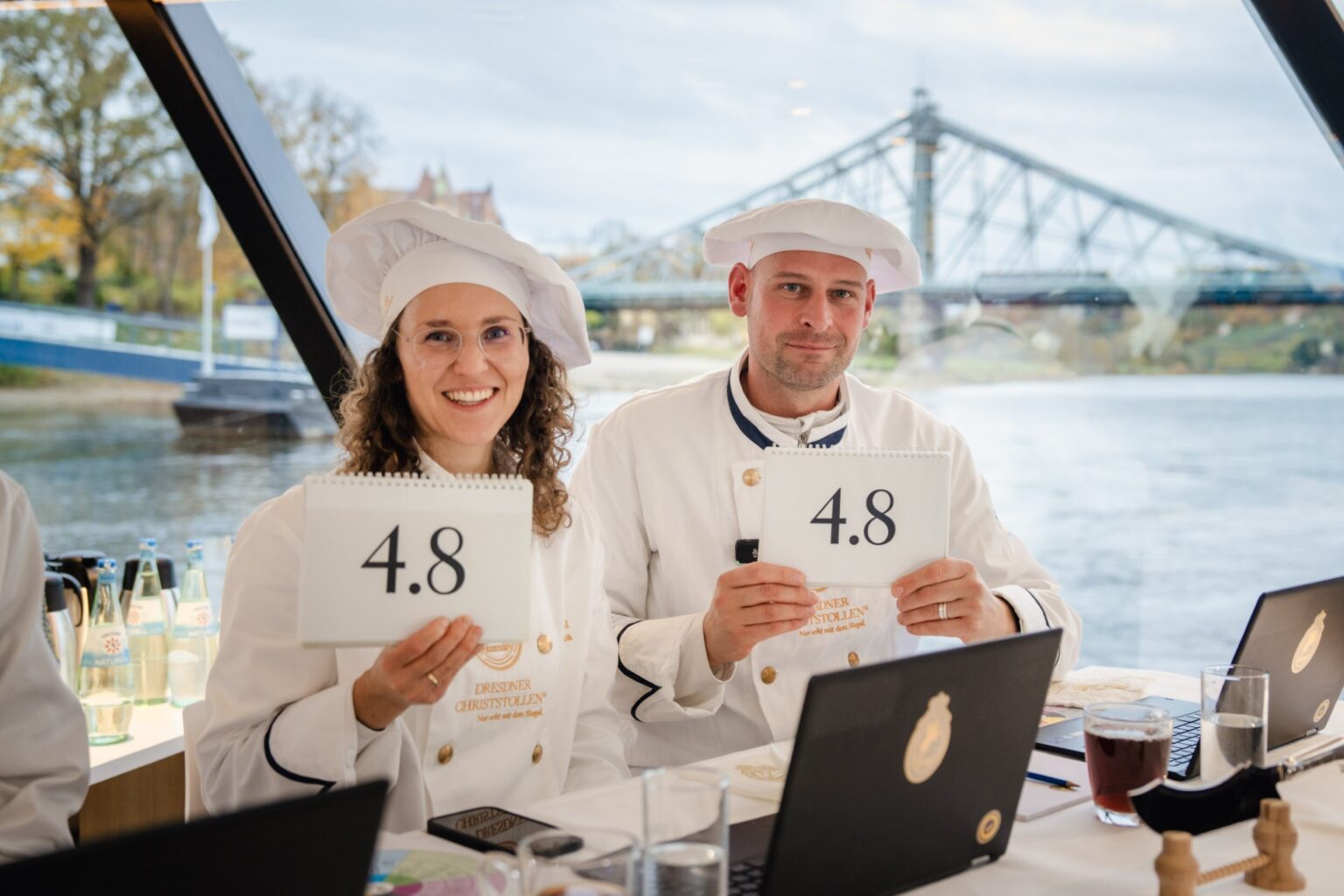
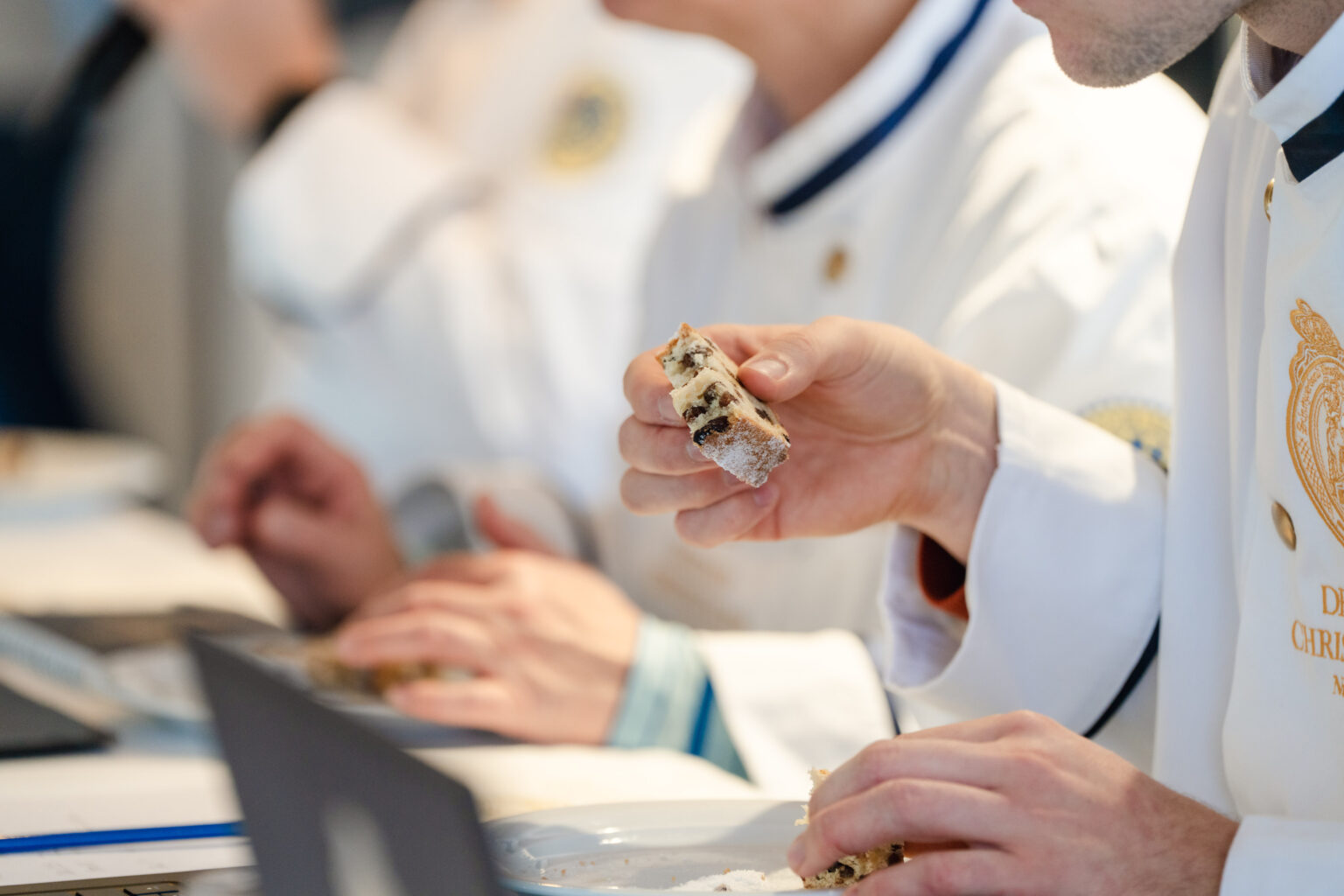
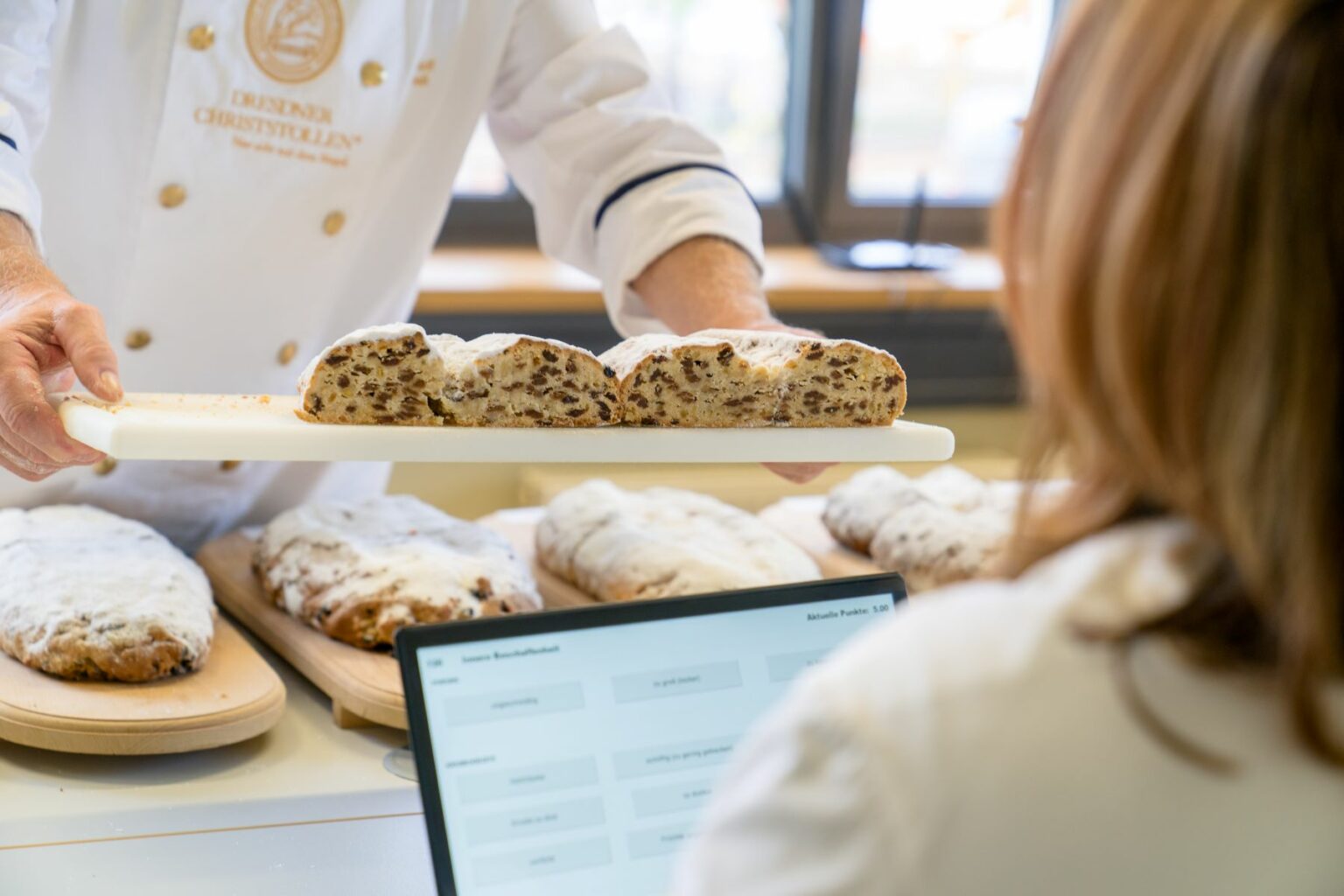
Guests are not normally permitted to attend the inspections, which are audited by the Saxon Ministry of the Environment and Agriculture. However, to get an idea of how such a stollen test is conducted and what criteria are used to evaluate the entries in the four specified categories, a stollen test was held for the first time in 2025 on the Elbe River aboard the “Gräfin Cosel,” a saloon ship operated by Sächsische Dampfschifffahrt. During the cruise, members of the press and guests witnessed firsthand how the independent panel of experts evaluates several Dresden stollen for quality and taste. The trained experts explained the criteria used for each assessment and then invited the ship’s guests to join them for a tasting.
PROTECTION ASSOCIATION BOARD MEMBER RALF ULLRICH
“With the public stollen inspection aboard the ‘Gräfin Cosel,’ we aim to transparently convey what matters to us in the proven quality assurance process for the Dresden Christmas stollen. The stollen inspection is not a competition for the most beautiful or the best stollen. Rather, our goal is to preserve the quality and exclusivity of our traditional product. The stollen inspections ensure that the quality promise we make to our customers when they purchase a Dresden Christmas stollen is fulfilled in terms of taste and quality.”
Only Dresden Christmas stollen are inspected ...
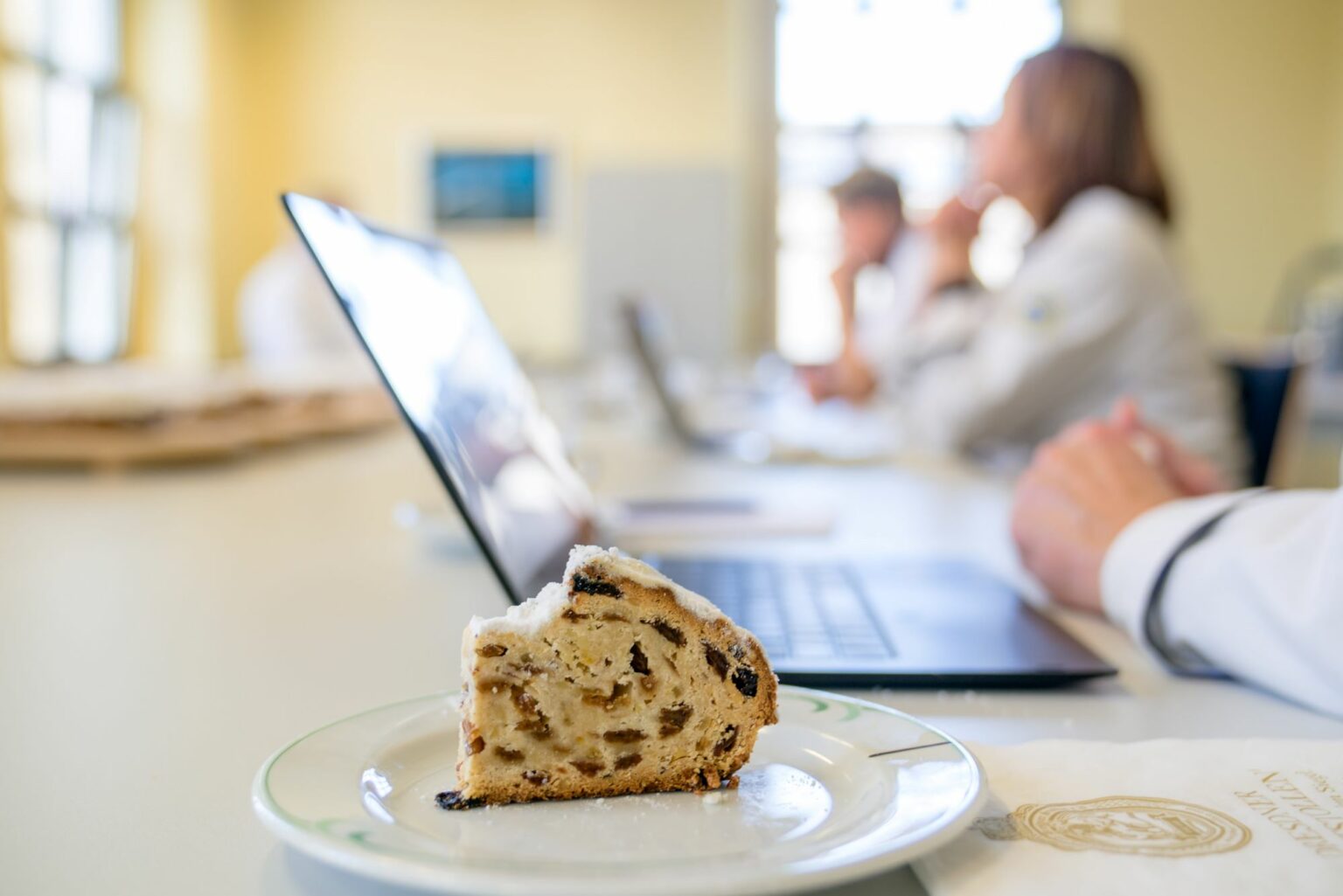
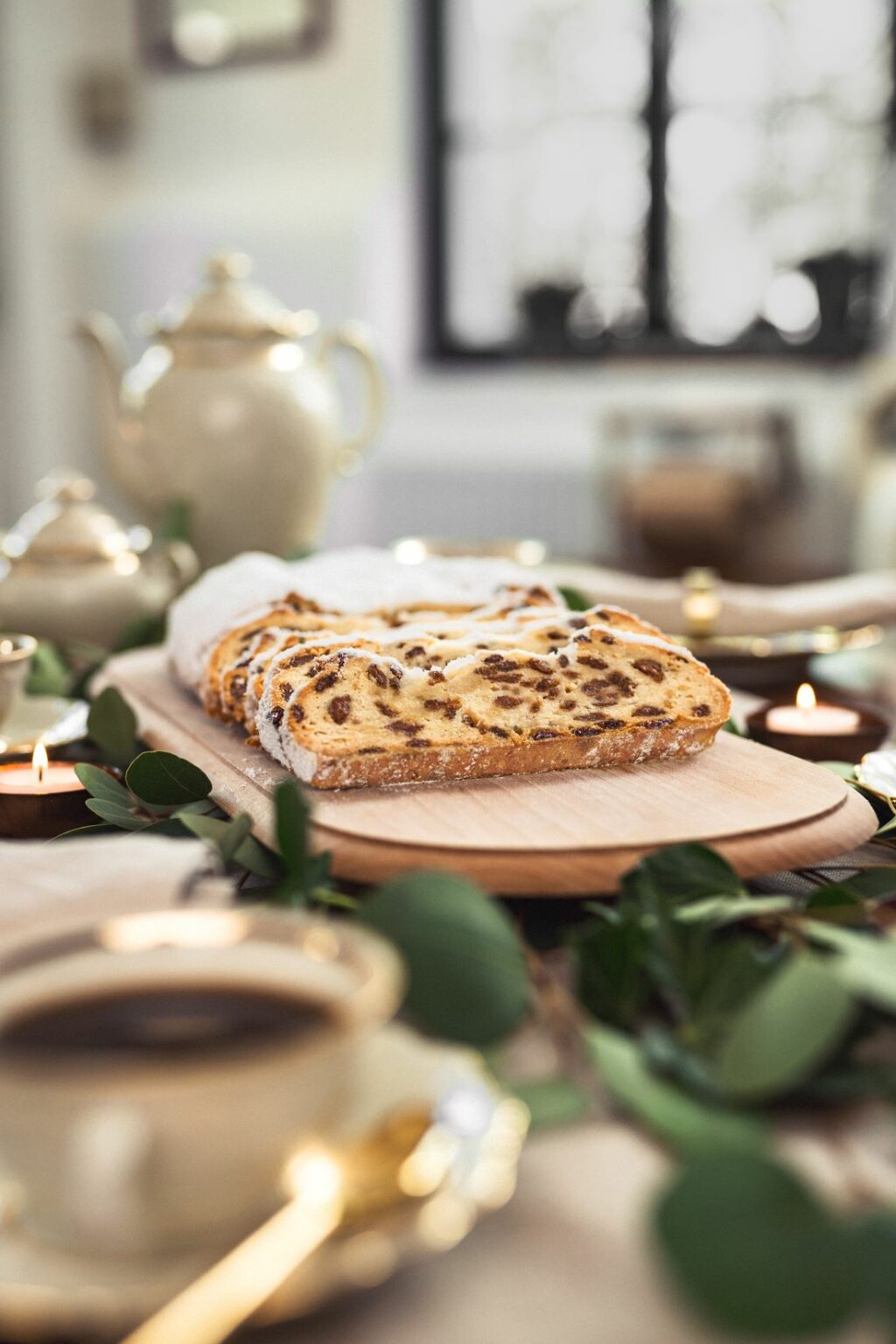
…the world-famous raisin stollen with centuries of culinary history. These traditional pastries, which have been registered as a Protected Geographical Indication with the European Union since 2010, may only be produced in a bakery operating year-round within the protected area. In addition, they must comply with the composition strictly prescribed in the basic recipe: In relation to the amount of flour, they must contain at least 65 percent raisins, 50 percent butter or clarified butter, 20 percent candied orange and lemon peel, and 15 percent sweet and bitter almonds. The use of margarine, artificial flavors, or preservatives is not permitted.
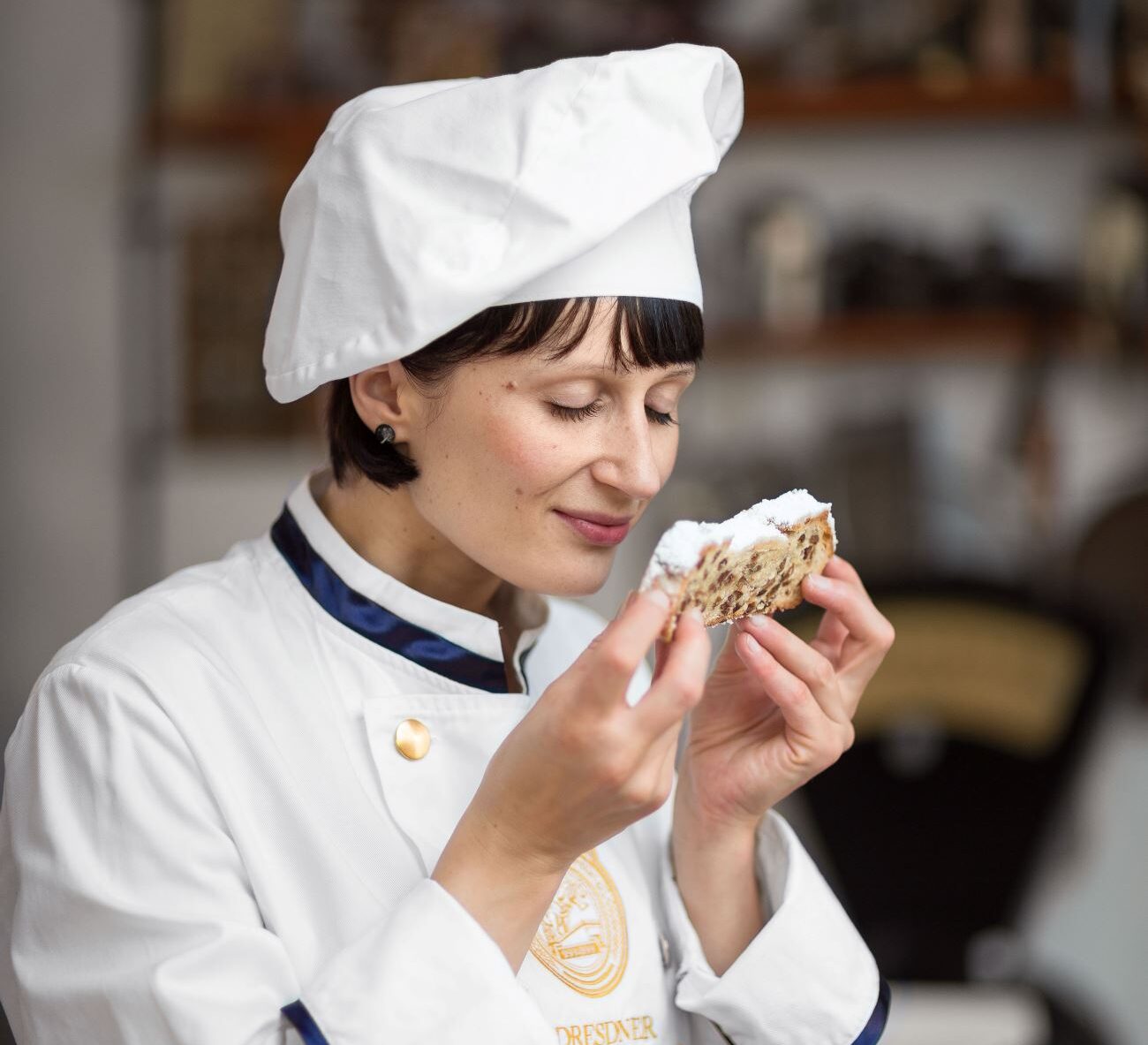
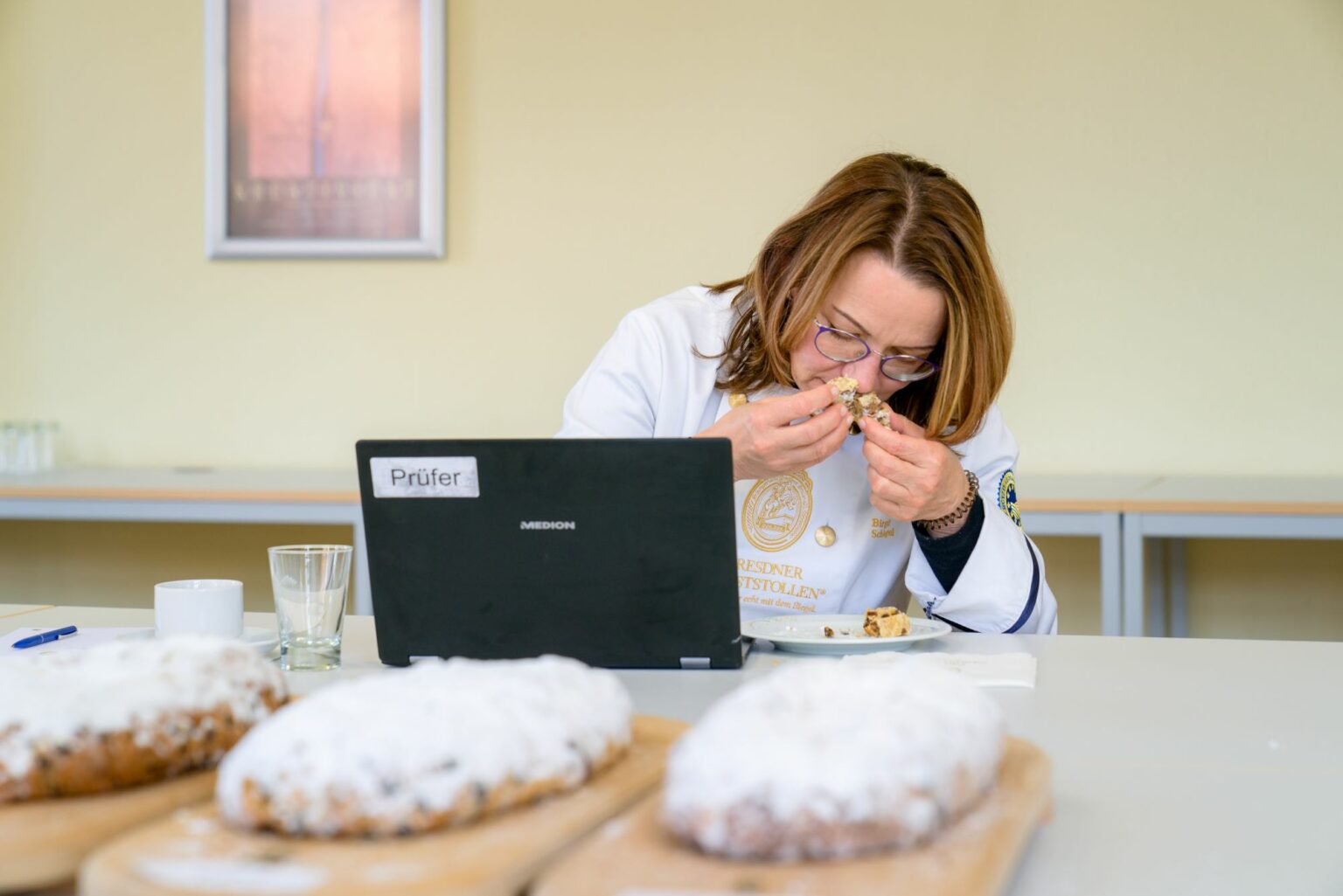
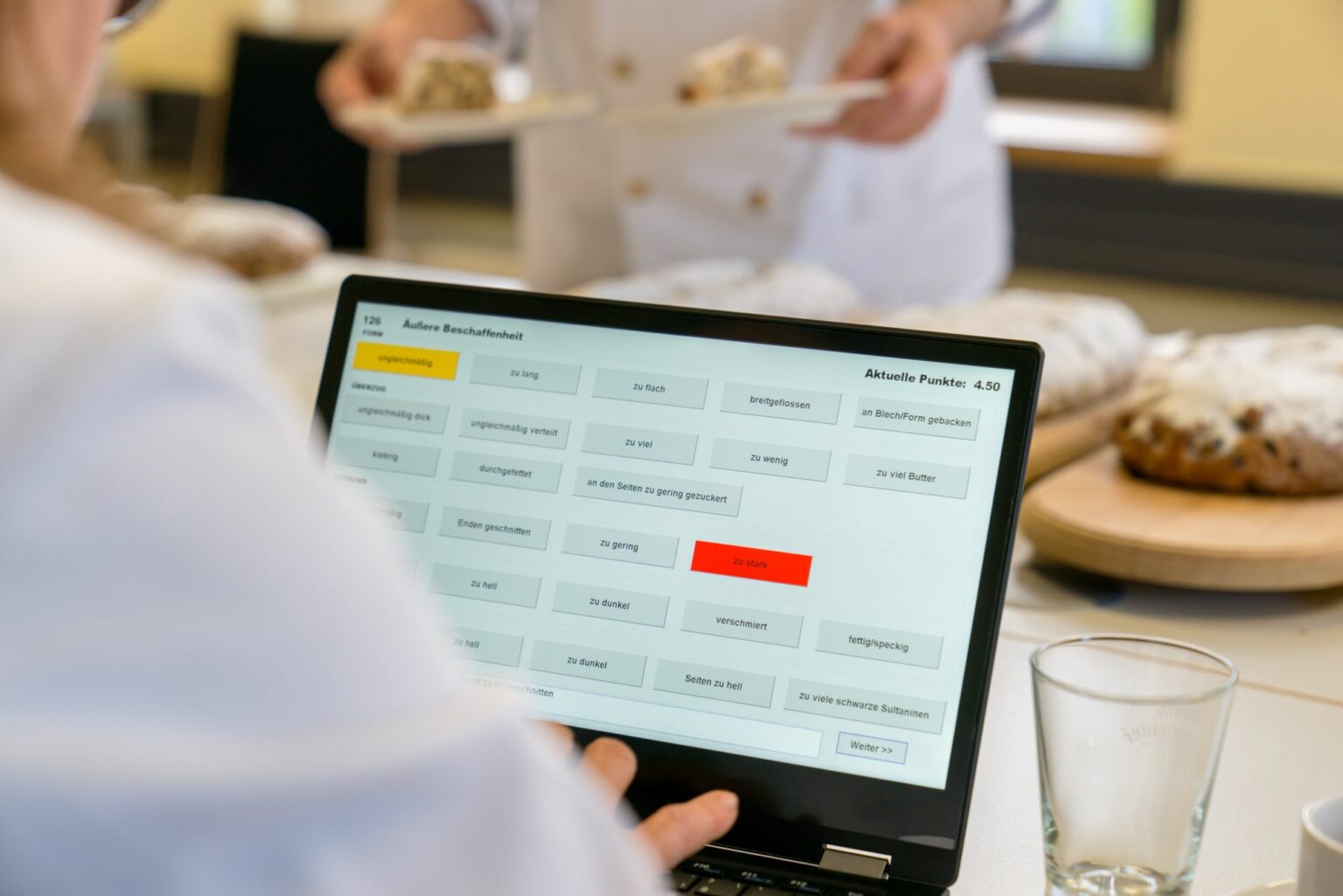
In the Stollen evaluations themselves—an assessment process that has been tried and tested for three decades now—the evaluators ultimately grade four criteria: internal and external quality, aroma, and taste. Visually, the typical shape and color of the base are assessed, and attention is paid to ensuring that the powdered sugar is applied finely and the raisins are evenly distributed. In addition, the crust and crumb also play a decisive role in the scoring. The aroma, meanwhile, should exhibit the typical Stollen scent—a blend of the aromatic ingredients characteristic of Stollen. And in terms of taste, a balanced composition of all ingredients is required, in which raisins, candied orange peel, candied lemon peel, almonds, and butter come together perfectly. A maximum of five points can be awarded per category, for a total of 20 points. To receive the Golden Stollen Seal, a minimum of 16 points must be achieved. Since 2020, the judging panel has been working digitally. The sensory evaluation is conducted using specially developed software.
In addition to the Golden Stollen Seal, another distinguishing feature of the Dresden Stollen is the blue-and-yellow EU seal. This identifies products and foods whose origin can be directly traced to a specific geographical area or is firmly associated with a particular region. The Dresden Christstollen is one of the products with a Protected Geographical Indication. It is listed in the European Register of Protected Designations of Origin and Geographical Indications—the “EU Quality Register.” This register is maintained and monitored by the European Union.